

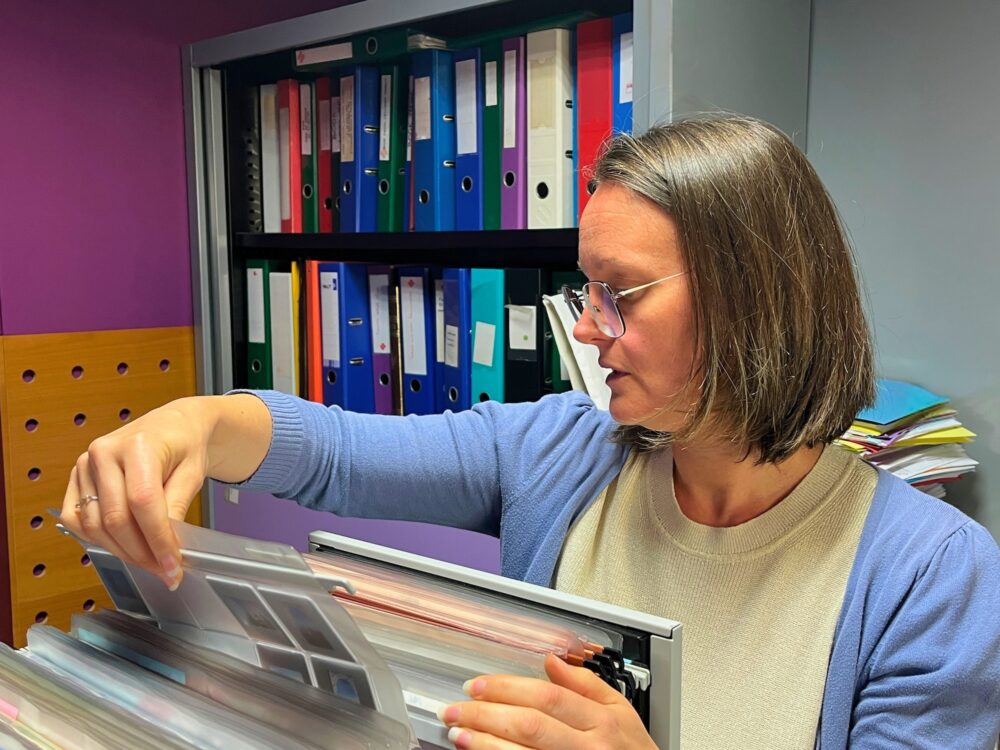
Ever wonder how Disneyland Paris keeps its incredible history alive, capturing every magical moment for generations to come? We went behind the scenes to meet Marie-Geneviève, the dedicated manager of the park’s Media Library. She holds the keys to an amazing collection, preserving the resort’s visual heritage and making sure every precious memory is there when we need it.
Marie-Geneviève Masseron joined the Audiovisual Broadcast teams in late 2008, initially as the photo library manager. Back then, the photothèque was a vast space where people mostly came in person to look at physical photos – negatives, slides, ektas. We started digital photography in 2002, but really ramped up digitization from 2015. My role evolved as we began managing videos too; that’s when I became the Media Library manager. Before this, videos were handled separately, mainly stored on tapes and reels by a very specific division.
My daily life involves answering countless requests. Our library is a central hub, holding Disneyland Paris’ historical archives, and I work closely with Emilie, who does incredibly valuable work too! A huge part of our day is managing our digital database. When we receive finalized photos, retouched and approved by various teams, we meticulously reference them. We also collaborate with photo and video production teams to gather footage and shoots, adding them to our media library. Our goal is to centralize and share content, both for current use and for its historical preservation. We carefully follow official naming conventions for attractions and locations. It’s crucial to accurately describe the image’s subject, location, or people. The more precise our indexing, the easier it is for someone searching for a photo or video to find it later.
Every department asks for our help. Since we’re part of the Marketing division, many requests involve communication campaigns. Right now, for example, we’re really busy with Halloween and Christmas content. More recently, we’ve been heavily involved in managing the production and post-production for Disney Adventure World. We delivered a massive amount of photo and video content for Press, Marketing, Sales teams, and agencies alike.
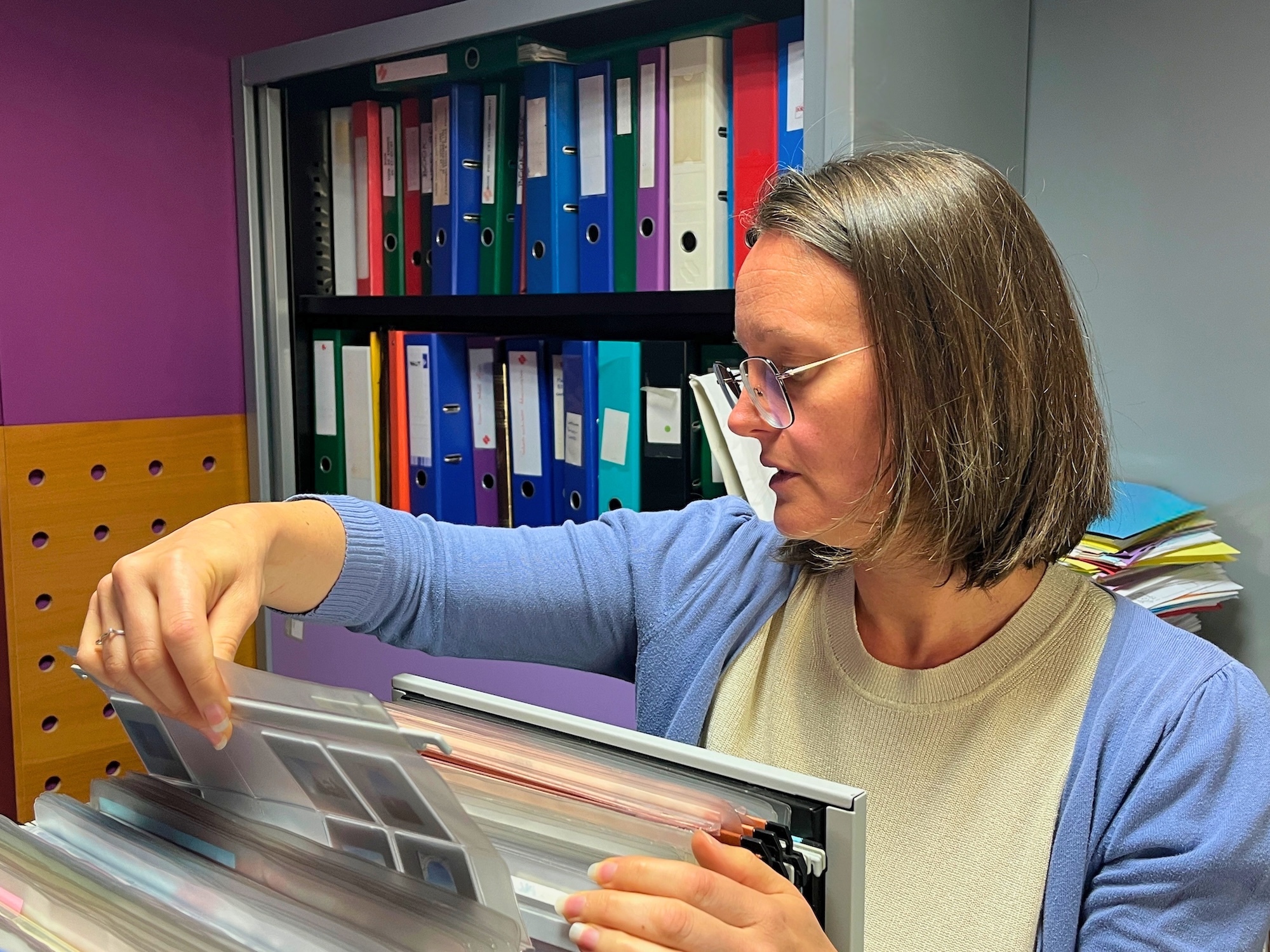
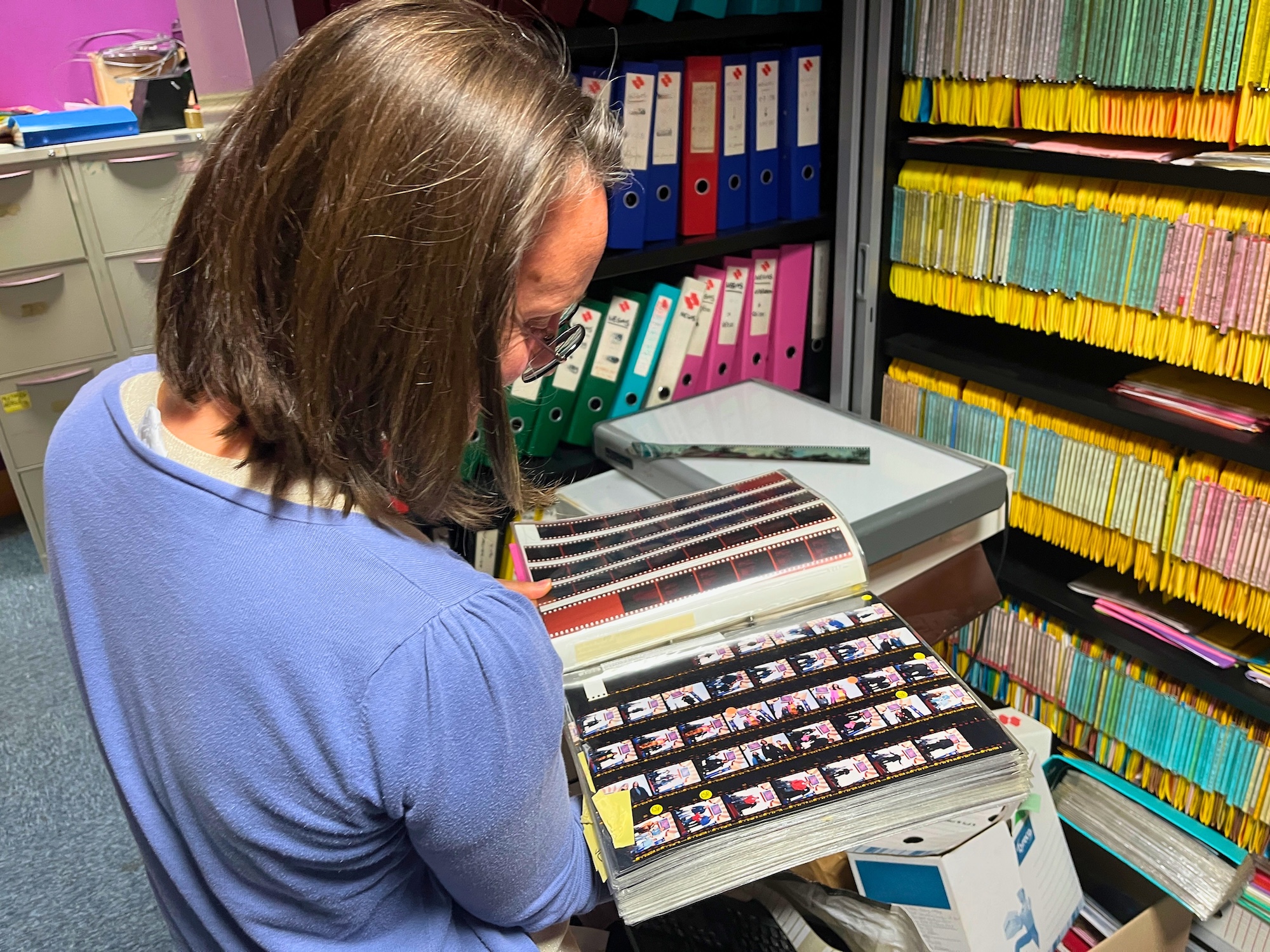
Do we still have physical photos? Absolutely! We still have what we call the ‘small photo library.’ Drawers are still full of small and medium-format negatives and ektas. There’s a huge amount of content still waiting to be digitized. I work closely with Christophe, our graphic designer, who scans many batches of images. Together, we select the best photos from the original contact sheets, as there can be blurry shots or many very similar takes. The chosen photos are then scanned. Christophe cleans them, removes dust, and might slightly adjust the chrominance or revive colors. Then, we integrate them into our platform.
However, not all these images are available to everyone, often due to rights issues. Many photos no longer have valid broadcast rights or show obsolete elements. Yet, Cast Members or departments can still request them if they have a specific need. We still have so many gems undiscovered! Even though I’ve been here for a while, we’ve never had the chance, given all our other activities, to thoroughly search through all the old archives. We sometimes stumble upon really amusing things. We’re moving chronologically through the digitization process. We started with images from 1991 and are currently in 1993. Recently, we rediscovered photos from a concert at Billy Bob’s featuring seemingly well-known country musicians. It’s fantastic to unearth little treasures that even people who were there at the time might not remember!
So, we keep finding and bringing out many small treasures from our archives.
After working with archive photos for so long, have I developed an instinct to date an image just by looking at it? Yes, definitely! First, there’s a clear difference between film photography and digital photography – they have completely different looks. Even when a film photograph is scanned and digitized, it retains a unique grain. Digital photos are much sharper. Today’s technologies provide extremely detailed images, with a clarity we couldn’t always achieve with film.
Conversely, photographers from the film era also had a different way of composing and capturing their shots. So, there’s that whole technical dimension. Then, clothes provide many clues. The way people dressed in the 1990s is very different from today’s styles.
Among all the archives I’ve handled or rediscovered, is there one image, photo series, or period that particularly struck me? What probably impressed me the most, even if it sounds quite classic, are all the aerial photographs taken before the park’s construction. These images are truly breathtaking. You can see the site’s evolution, watching how simple fields transformed, in a very short time, into a fully built and absolutely fabulous place.
So, there are still many images of things that are no longer visible today. Knowing they still exist somewhere is quite incredible. Yes, we preserve so many things. We even have videos that used to play on hotel televisions, for example. These are contents that some people associate with real memories. Even what isn’t considered heritage today will become so tomorrow. Current visuals could be historical next year! So, our work always aims to perpetuate these images and ensure they can be found in the future. We all have our way of logging an image, but we must always ask ourselves: will someone easily find this in ten years, when I’m no longer here? We constantly need to put ourselves in others’ shoes and think about continuity and logic, so our work remains easily understandable.
It’s a profession that involves working with the past while always thinking about the future.